
Profit & Loss Loans
what you built... and what the system misses
Profit & loss Loans
what you built... and what the system misses
Your business is profitable
the strategy uses the statement that proves it.
A CPA-prepared 12-month profit and loss statement becomes the qualifying income document — no tax returns.
Your business is profitable
the strategy uses the statement that proves it.
A CPA-prepared 12-month profit and loss statement becomes the qualifying income document — no tax returns.
Your business is profitable
the strategy uses the statement that proves it.
A CPA-prepared 12-month profit and loss statement becomes the qualifying income document — no tax returns.
🦸
Your Superpower
Businesses with multiple accounts, irregular deposit timing, international revenue, co-mingled funds, or seasonal patterns produce bank statement histories that underwriters struggle to read cleanly. And the tax return — which reflects the strategic deductions your accountant applied — often understates the number even further. A CPA-prepared profit and loss statement cuts straight to what the business actually earned.
🌀
What the Beige Box gets wrong
The standard bank statement loan works well when deposits are clean, consistent, and clearly traceable as business income. When the deposit history is complicated — multiple accounts, large transfers, co-mingled personal and business funds, seasonal swings, international wire transactions — the bank statement method produces a qualifying income that does not reflect what the business actually earned.
The P&L loan replaces the bank statement as the income document. A licensed CPA prepares a 12-month profit and loss statement covering the most recent period. The lender uses that statement — not the deposits, not the tax return — as the basis for qualifying income. For businesses whose profitability is real but whose deposit history is hard to read, this is the cleaner path.
💥
Strategy note:
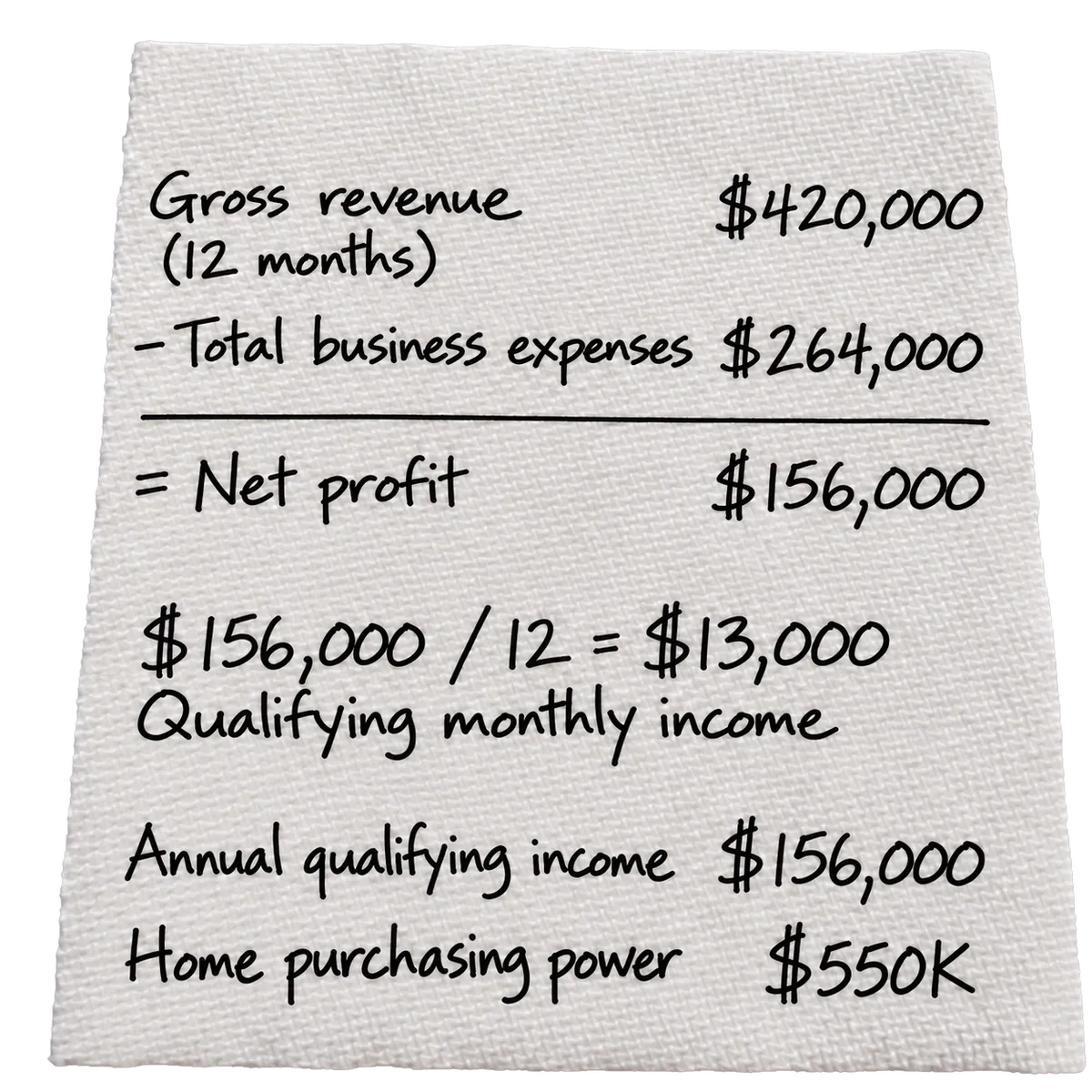
A licensed CPA prepares a 12-month profit and loss statement that covers the most recent 12 calendar months of business operations. The statement must show gross revenue, business expenses, and net profit. The lender uses the net profit figure as the monthly qualifying income — or a percentage of it, depending on the lender's guidelines. Try tax return or Bank Statement Loans first... they may save you money.
Version
WHO IT SERVES
Multiple business bank accounts across different banks
A CPA P&L consolidates all revenue and expenses into one clean document — no need to reconcile dozens of statements
Significant co-mingling of personal and business funds
The P&L shows business income separate from personal transactions regardless of which account it flowed through
International revenue or wire transfers
Foreign income can be documented on a P&L by a US-licensed CPA without triggering the sourcing questions that international transfers create in bank statement review
Highly seasonal business (slow and fast months)
The P&L shows the annual earnings pattern in a single document rather than 12 individual months that underwriters must interpret
Business had significant utilization of debt to bridge cash flow gaps
P&L loan will not highlight that whereas Bank Statement loan analysis may bring up more challenging questions
Recent business structure change
A P&L can reflect the new structure accurately even if the bank statement history still reflects the old one
✔️
Who this strategy is for
Self-employed buyers and business owners who have been in business for 12 or more months, whose business is genuinely profitable, and whose deposit history — for any of the reasons above — does not produce a clean qualifying income when reviewed month by month. This is particularly common in businesses with international clients, seasonal revenue patterns, multiple operating accounts, or complex expense structures.
❌
Who this strategy is NOT for
Buyers whose deposit history is clean, consistent, and clearly traceable — the bank statement path is simpler and produces equally strong qualifying income without the cost of a CPA-prepared document. The P&L strategy adds a step; it should be used when that step produces a materially better or cleaner result.
What the Lender will look at
1.
12-month CPA-prepared and signed profit and loss statement — most recent 12 calendar months
2.
CPA license verification — the CPA must be an active licensed accountant. An in-house bookkeeper's P&L is not sufficient.
3.
Business bank statements (supporting documentation — some lenders require 2 to 4 months to verify consistency with the P&L)
4.
Business license or other verification that the business has been operating for the required period (typically 12–24 months)
5.
Government-issued ID
What your CPA needs to include in the p&L
1.
Business name and ownership confirmation
2.
Period covered (the 12 most recent calendar months)
3.
Gross revenue by category or total
4.
Itemized or categorized business expenses
5.
Net profit (gross revenue minus total expenses)
6.
CPA signature, license number, and date
7.
Statement that the P&L was prepared from the business's financial records
🔥
WATCH OUT!!!
The things that can undermine this strategy
● The CPA must be licensed. An unlicensed bookkeeper, a tax preparer who is not a CPA, or an in-house accountant without credentials does not satisfy the lender's requirement. The licensing is the credibility that makes the document work.
● The P&L must reconcile to observable bank activity. Lenders who request supporting bank statements will compare the P&L's revenue figures to actual deposits. A P&L that does not match the deposits raises questions the strategy cannot survive.
● A P&L showing a loss or declining profitability year-over-year undermines the strategy. The document needs to demonstrate consistent or growing profitability. If the business had a difficult year, timing the application correctly matters.
● Lenders vary significantly on P&L requirements. Some require only the P&L. Others require 2 to 4 months of supporting bank statements in addition. Know the lender's specific requirements before the CPA prepares the document.
Your strategy starts here
Tell us about your business and your CPA relationship. We will walk you through exactly what the P&L needs to include, which lenders accept this document type, and how the qualifying income from your P&L compares to the bank statement method for your specific situation. No application yet. No credit pull.
🦸
Your Superpower
Businesses with multiple accounts, irregular deposit timing, international revenue, co-mingled funds, or seasonal patterns produce bank statement histories that underwriters struggle to read cleanly. And the tax return — which reflects the strategic deductions your accountant applied — often understates the number even further. A CPA-prepared profit and loss statement cuts straight to what the business actually earned.
🌀
What the Beige Box gets wrong
The standard bank statement loan works well when deposits are clean, consistent, and clearly traceable as business income. When the deposit history is complicated — multiple accounts, large transfers, co-mingled personal and business funds, seasonal swings, international wire transactions — the bank statement method produces a qualifying income that does not reflect what the business actually earned.
The P&L loan replaces the bank statement as the income document. A licensed CPA prepares a 12-month profit and loss statement covering the most recent period. The lender uses that statement — not the deposits, not the tax return — as the basis for qualifying income. For businesses whose profitability is real but whose deposit history is hard to read, this is the cleaner path.
💥
Strategy note:
A licensed CPA prepares a 12-month profit and loss statement that covers the most recent 12 calendar months of business operations. The statement must show gross revenue, business expenses, and net profit. The lender uses the net profit figure as the monthly qualifying income — or a percentage of it, depending on the lender's guidelines. Try tax return or Bank Statement Loans first... they may save you money.
Version
WHO IT SERVES
Multiple business bank accounts across different banks
A CPA P&L consolidates all revenue and expenses into one clean document — no need to reconcile dozens of statements
Significant co-mingling of personal and business funds
The P&L shows business income separate from personal transactions regardless of which account it flowed through
International revenue or wire transfers
Foreign income can be documented on a P&L by a US-licensed CPA without triggering the sourcing questions that international transfers create in bank statement review
Highly seasonal business (slow and fast months)
The P&L shows the annual earnings pattern in a single document rather than 12 individual months that underwriters must interpret
Business had significant utilization of debt to bridge cash flow gaps
P&L loan will not highlight that whereas Bank Statement loan analysis may bring up more challenging questions
Recent business structure change
A P&L can reflect the new structure accurately even if the bank statement history still reflects the old one
✔️
Who this strategy is for
Self-employed buyers and business owners who have been in business for 12 or more months, whose business is genuinely profitable, and whose deposit history — for any of the reasons above — does not produce a clean qualifying income when reviewed month by month. This is particularly common in businesses with international clients, seasonal revenue patterns, multiple operating accounts, or complex expense structures.
❌
Who this strategy is NOT for
Buyers whose deposit history is clean, consistent, and clearly traceable — the bank statement path is simpler and produces equally strong qualifying income without the cost of a CPA-prepared document. The P&L strategy adds a step; it should be used when that step produces a materially better or cleaner result.
What the Lender will look at
1.
12-month CPA-prepared and signed profit and loss statement — most recent 12 calendar months
2.
CPA license verification — the CPA must be an active licensed accountant. An in-house bookkeeper's P&L is not sufficient.
3.
Business bank statements (supporting documentation — some lenders require 2 to 4 months to verify consistency with the P&L)
4.
Business license or other verification that the business has been operating for the required period (typically 12–24 months)
5.
Government-issued ID
What your CPA needs to include in the p&L
1.
Business name and ownership confirmation
2.
Period covered (the 12 most recent calendar months)
3.
Gross revenue by category or total
4.
Itemized or categorized business expenses
5.
Net profit (gross revenue minus total expenses)
6.
CPA signature, license number, and date
7.
Statement that the P&L was prepared from the business's financial records
🔥
WATCH OUT!!!
The things that can undermine this strategy
● The CPA must be licensed. An unlicensed bookkeeper, or an in-house accountant without credentials does not satisfy the lender's requirement. The licensing is the credibility that makes the document work.
● The P&L must reconcile to observable bank activity. Lenders who request supporting bank statements will compare the P&L's revenue figures to actual deposits. A P&L that does not match the deposits raises questions the strategy cannot survive.
● A P&L showing a loss or declining profitability year-over-year undermines the strategy. The document needs to demonstrate consistent or growing profitability. If the business had a difficult year, timing the application correctly matters.
● Lenders vary significantly on P&L requirements. Some require only the P&L. Others require 2 to 4 months of supporting bank statements in addition. Know the lender's specific requirements before the CPA prepares the document.
Your strategy starts here
Tell us about your business and your CPA relationship. We will walk you through exactly what the P&L needs to include, which lenders accept this document type, and how the qualifying income from your P&L compares to the bank statement method for your specific situation. No application yet. No credit pull.